On sensitivity, unshaming, and learning to use your strength in service of your own vision.
I was an incredibly sensitive kid.
When strong emotions showed up, I often felt them as a full-body heaviness. A tension in my neck and shoulders. A tightening grip in my jaw. I noticed things other people seemed to miss. I felt other people's pain deeply. Injustice kept me up at night. And I cared SO much about people, moments, and things that mattered to me.
I also spent a lot of time feeling embarrassed by how much I cared.
For a long time, I didn't know what to make of my sensitivity, or why the world seemed to land so intensely for me.
I see it very differently now.
But first, let me tell you a little about little Stacy.
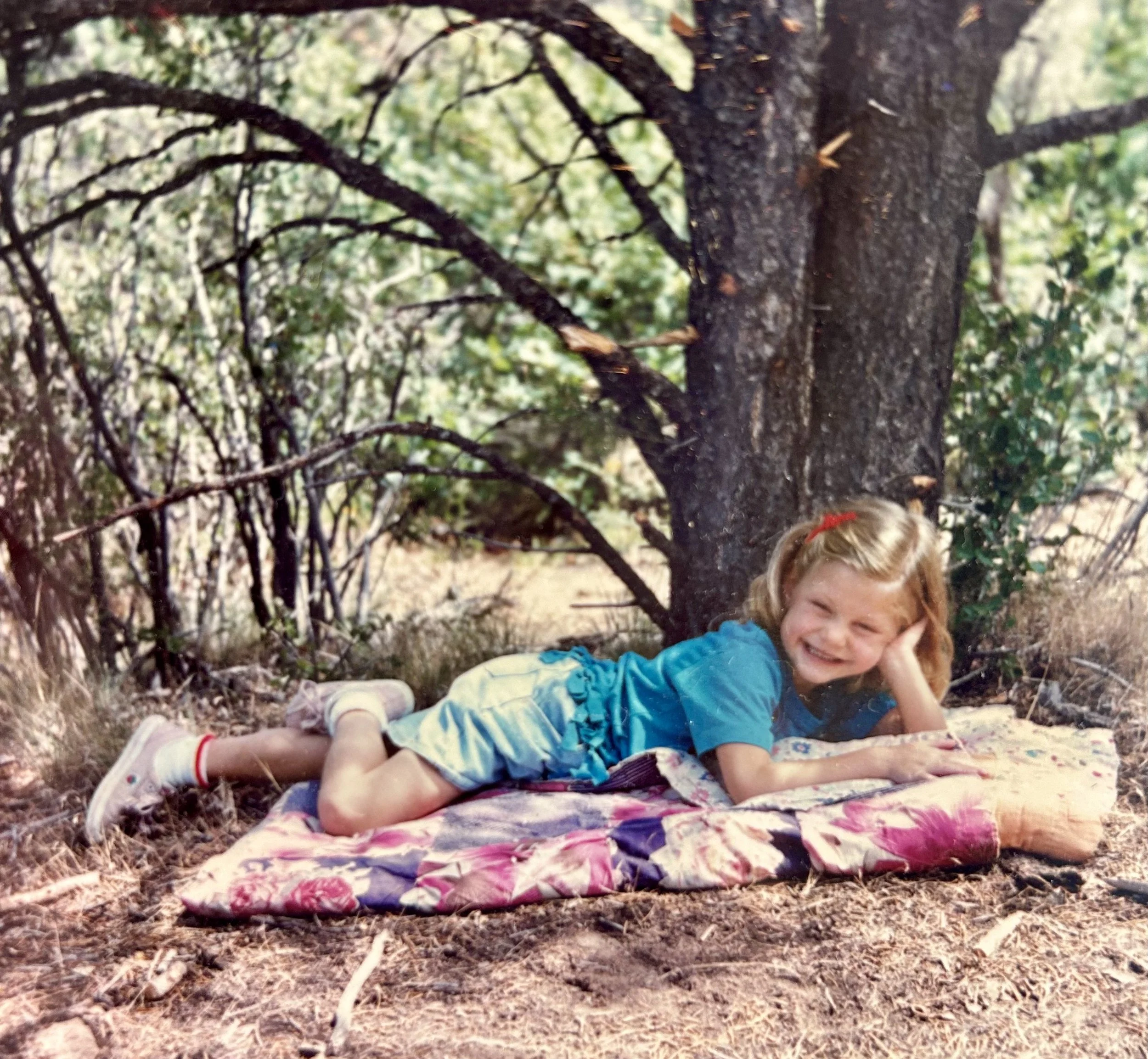
Here I am at 4 years old at McPhee Dam in the Summer of ‘87.
I’m almost certain I matched my red anklet to my hair barrette.
Little Stacy felt EVERYTHING.
Some of you know that my dad was diagnosed with a chronic disease when I was in first grade. I would go with him to his doctor's appointments because I didn't want him to go alone. (I share more about this in my podcast episode, The Roots.)
Around that same time, my older sister was being bullied at school. I took it upon my first grade self to find those 4th grade bullies and stand up to them. Apparently, I had a pretty strong sense of justice from an early age (my mom said this same thing on FB just yesterday)!
In fourth grade, I remember two sisters who rode my school bus and didn't have warm coats in the winter. Seeing them made me feel heavy and sad for the rest of the day. I wondered what I could do about it without embarrassing them. I thought about it all day long, unable to focus on math story problems or learning to write in cursive.
I also remember my fourth-grade teacher telling a little boy that "we don't wear the same clothes to school two days in a row." My reaction was as if she'd slapped him across the face in front of all of us. In some ways, she had.
Meanwhile, my elementary school peers were thinking about boys, soccer, Umbros, Adidas Sambas, and Polo shirts.
I felt weird. Different. Like I was receiving a frequency other people couldn't quite hear.
I could buy the “right” outfit and shoes at the mall, but the costume of “cool” indifference never fit me.
Fast forward to high school, and I was still looking out for my sister. When Marissa (name not changed to protect the bully!) and others were bullying my sister and teasing her for not having a date to prom, I waited by Marissa's locker and told her, "I wouldn't worry about my sister, because last I heard, you didn't have a date to prom either!" She needed to know that someone was noticing what she was doing, and it wasn’t okay.
Looking back, I see something else, too.
I was a witness and an advocate. I could recognize when someone was hurting, feel the injustice of it, and find the courage to speak up.
I was powerful with other people.
Learning to use my strength in service of MY vision.
I think about this Audre Lorde quote often:
"When I dare to be powerful, to use my strength in the service of my vision, then it becomes less and less important whether I am afraid."
I've spent a lot of my life using my strength to care for and advocate for other people. It's taken a lot of unshaming work to recognize that I can bring that same strength, care, and commitment to my own vision, too.
There's another piece of little Stacy's story that feels important here: it wasn't just how much I cared that made me self-conscious. It was how enthusiastic I was about things, too.
My dad used to tell me, "Don't get too excited, Stacy." Sometimes even when I was angry. Which never made sense to me because I thought of "excited" as a happy thing, and boy oh boy was I NOT happy in that moment!
I learned to believe that my enthusiasm was something I needed to dial down.
I realize now that deep care and enthusiasm are my true nature!
And the more I think about it, the more I recognize that these qualities aren't just personal characteristics. They're at the very heart of how I show up in my work.
It's THIS that makes me a powerful coach and facilitator.
My body feels the energetic shifts in a room. Deeply.
I notice when something isn't being said because the room doesn't feel safe enough. I hear the faint cracking of someone's voice when they're speaking a truth that they've never said out loud before.
I notice. I feel. I care.
I was born to do the work I'm doing now.
Every client who places their trust in me is inviting me into a sacred space. I will never take that for granted.
To the many people who have placed their most tender emotions, experiences, and moments in the space between us: thank you. It is a privilege I hold close.
I don't want to become less sensitive. I don't want to care less. I don't want to dampen my enthusiasm or make myself smaller.
I want to keep learning how to work with these qualities, understand them, and use them intentionally.
Finding language, and a framework, for something I'd always felt.
I first encountered David Bedrick's work in 2022. I took a few of his classes, read two of his books, and found myself drawn to the way he understood and worked with people.
In 2023, I actually applied to join his facilitation training, but ultimately withdrew my application. I wanted to experience the work as a client before becoming a practitioner. That felt important to me, and I’m so grateful I did it in that order. Knowing the power of this work in my bones as a client deeply informs my work as a practitioner.
This year, a spot unexpectedly opened up in his Process-Oriented Facilitation Training. I happened to see David's Facebook message announcing the opening, and I replied that very night. Within 10 minutes of seeing his post, I was in his class on Zoom!
The timing felt divinely orchestrated. Like I'd won the universal lottery.
And what a gift it has been.
For 10 months, I've been studying the Unshaming Way and somatic coaching with David and a wonderful group of classmates, with Ember as our teaching assistant.
I've also been working with Colleen, an unshaming somatic therapist for the past four years.
Through these experiences, I've come to understand something important: I think I've been an unshaming witness in some form for much of my life. But I didn't know what to call it, why it mattered, or how to intentionally cultivate it. David's work has given me the framework, language, and tools to understand what that means and how to bring it more intentionally into my own life and coaching practice.
As I brought the training to a close, I completed my final practicum: a live coaching demonstration in front of David and 20 of my peers.
I'd be BIG TIME lying if I said I wasn't nervous.
I felt excited and terrified. Deeply grateful. Sad that this chapter was ending. Delighted AND in disbelief that I get to do this work at all. And putting a big ol' shit ton of pressure on myself to do an A+ job.
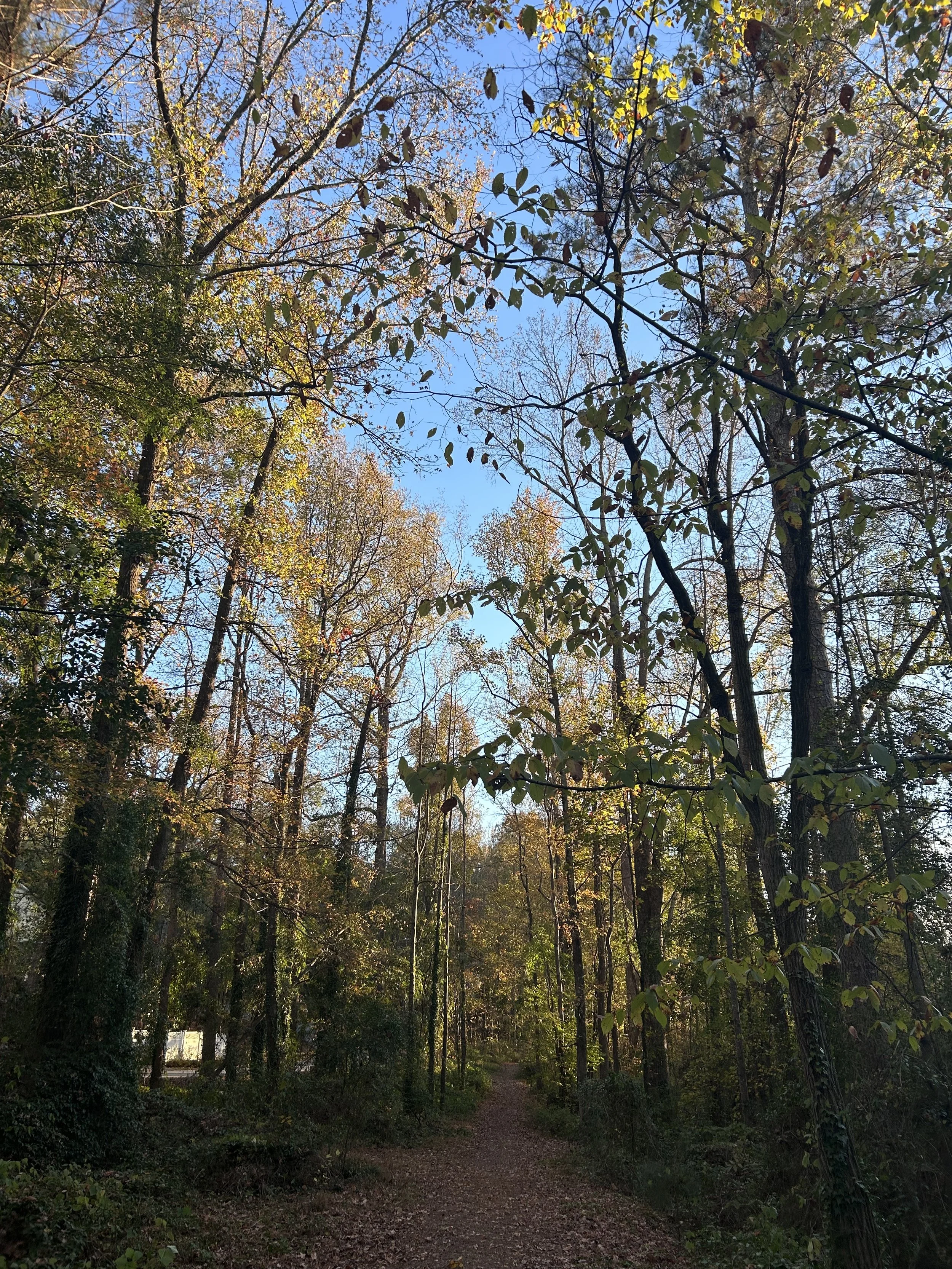
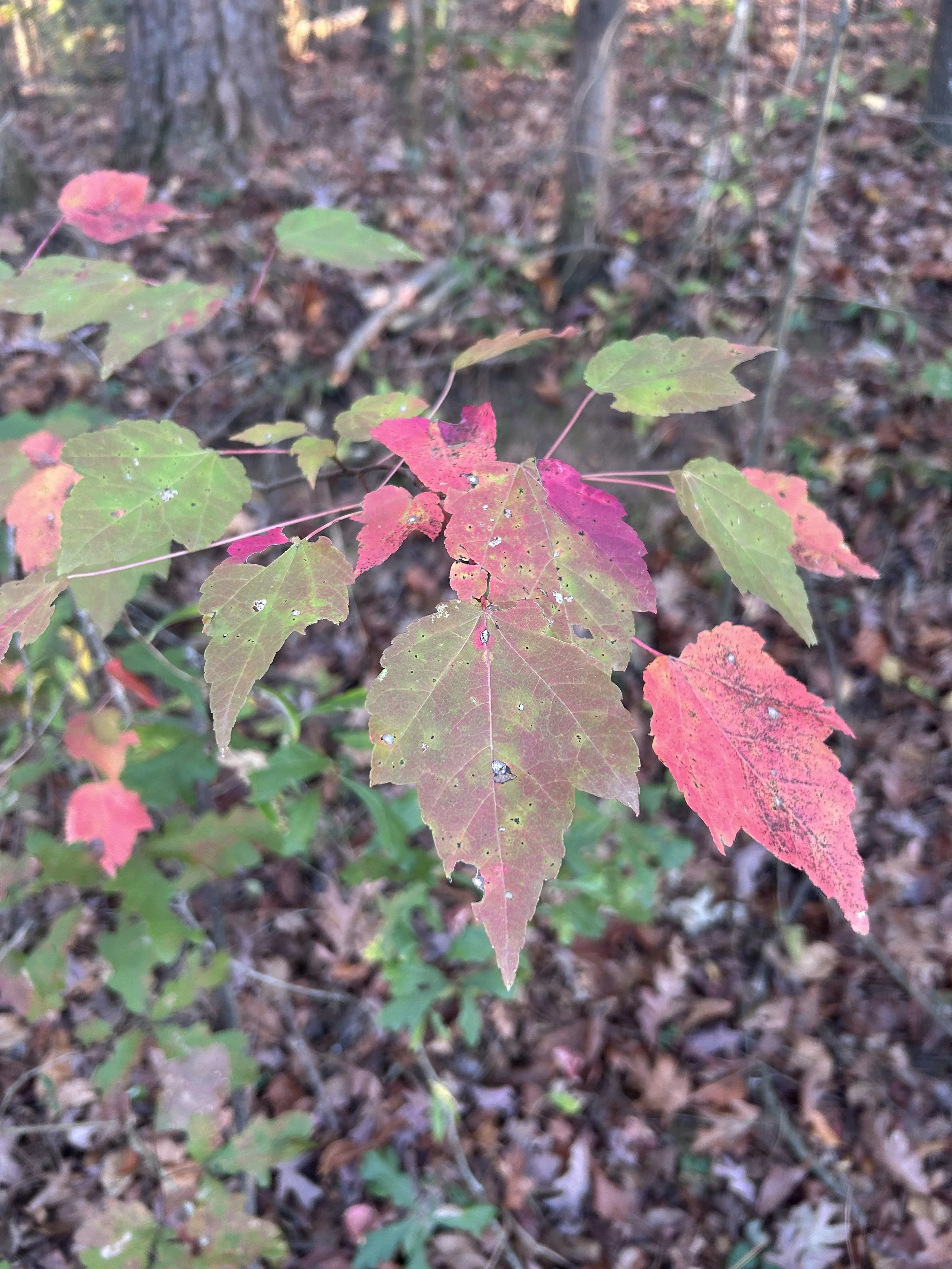
Over the days leading up to my practicum, I got intentional about resourcing myself. I hiked in the woods, danced around the house, called upon my treasured allies (thank you, friends, both dead and alive), and even had a conversation with little Stacy.
I reminded her that her care is magnificent. Powerful, even.
And after my coaching demonstration, the first thing David commented on was my enthusiasm.
There it was. Something I'd spent years feeling self-conscious about, reflected back to me as something worth noticing.
I am deeply grateful for David's teaching and for the community that has helped me deepen this work.
Unshaming ourselves, rather than trying to fix ourselves.
One thing my final practicum reminded me of is that unshaming isn't just something we practice with other people. It's something we need to practice with ourselves, too.
Meeting ourselves where we are. Getting curious about what's happening beneath the surface. Making room for the parts of ourselves we'd rather hide, dismiss, or hurry along. Not treating our feelings as problems to solve or rushing to label them as imposter syndrome, sensitivity, fawning, or perfectionism.
Just being with what's there, with compassion and curiosity.
Unshaming isn't about convincing ourselves that everything we do, feel, or experience is wonderful. And it isn't about pretending that difficult experiences aren't difficult.
It's about developing a different relationship with ourselves. One that makes room for the parts we've learned to judge, hide, or apologize for, and gets curious about what they might have to show us.
And sometimes, when we stop trying so hard to get rid of those parts of ourselves, we begin to see them differently.
We discover their gifts.
And I'm still learning to extend that same care and compassion to myself.
What a gift to deepen my understanding and practice of something that has been part of me for as long as I can remember.
And what a gift to keep becoming more fully myself.
🌱
A question for you:
What are some of the things you've learned to hide, minimize, or apologize for? What might become possible if you approached those parts of yourself with a little more curiosity and compassion?
If there are areas of your life where you feel gripped by shame, embarrassment, self-doubt, addictive patterns, or physical symptoms you can't quite make sense of, I'd love to talk. What if, instead of rushing to fix or get rid of these experiences, we got curious about what they might be trying to tell you, together? This is at the heart of unshaming work: meeting what's there with curiosity and compassion, rather than judgment.