Learning to center yourself 🎯
I've been on a bit of a training bender lately!
In mid-July, I became certified in Wilderness First Aid (WFA) and CPR. The following weekend, I completed a certification in facilitating Peacemaking Circles.
On paper, they could not have been more different.
One weekend, I practiced responding to wilderness emergencies and became surprisingly familiar with what fake blood feels like on my skin. 🤕 The next, I spent hours sitting in a circle with twenty two other people, listening deeply and speaking one at a time. ☮️
Both trainings ignited my love of learning. Better yet, I got to experience each training with a treasured friend and collaborator. Priya joined me for Wilderness First Aid, and David joined me for the Circlekeeping training. That meant these weekends weren't just about gathering up information. We got to process what we were learning together and explore what it might look like to actually live it.
By the time I got home, I was tired in the best possible way. My mind was full of new ideas, my heart was full from getting to spend time with two of my favorite people, and I found myself feeling deeply grateful for work that keeps inviting me to learn and grow.
After catching up on sleep (and some of my emails), I realized something.
Both weekends had expanded the edges of my map around what it means to center myself.
In Wilderness First Aid, Priya and I learned a lot of new acronyms.
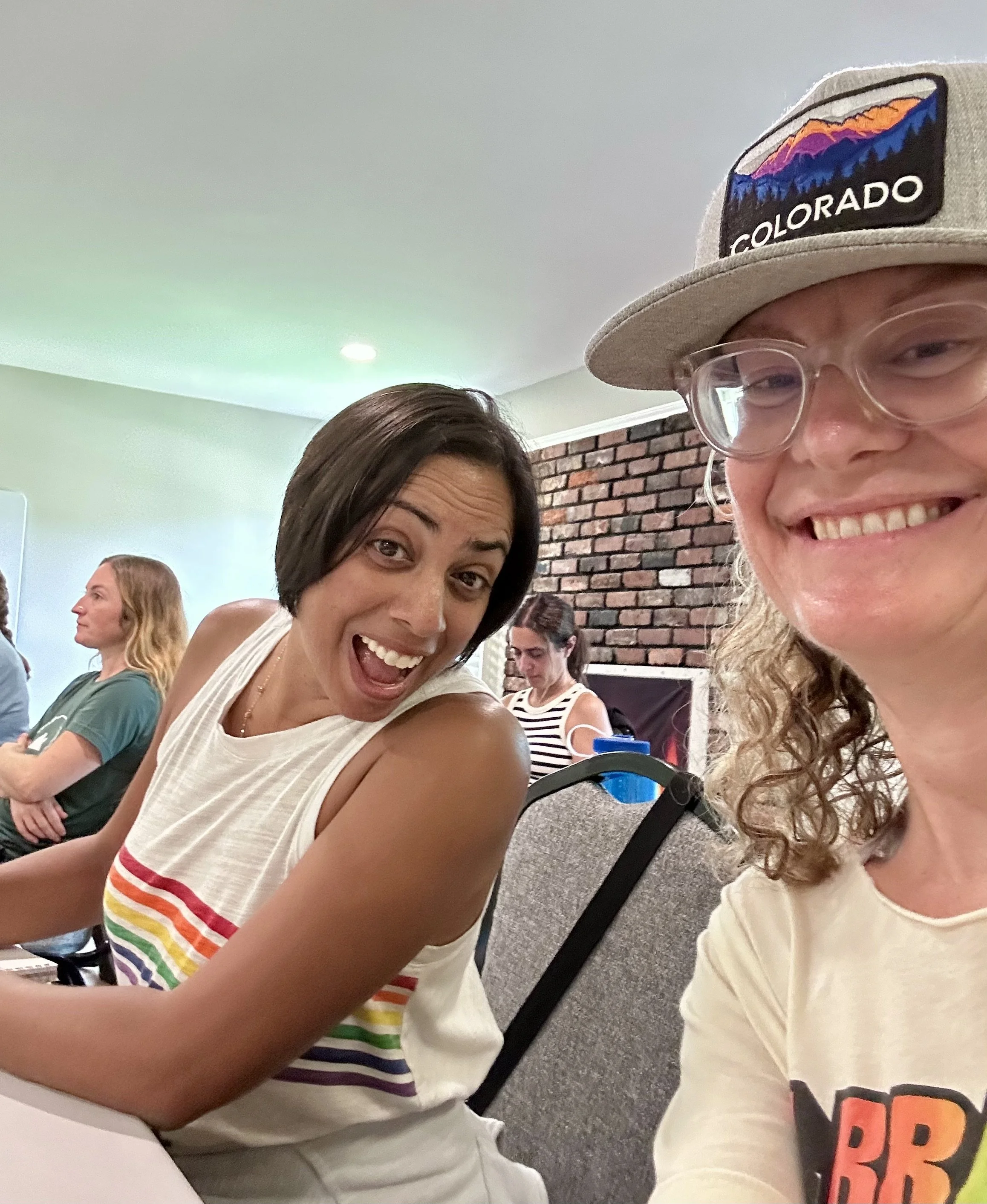
Wilderness First Aid with Priya smiling about all the acronyms
The first one we were taught was DRGO.
The D stands for Danger.
Before you rush toward someone who needs help, you're taught to stop and look around.
Is there danger to me?
Then to others.
Then to the patient.
Our instructor, Trey, repeated it all weekend.
"My number one priority is me."
At first, it sounded selfish.
Then he explained why.
If I don't make sure I'm safe first, when I arrive at a scene where there was one patient, there can quickly become two.
It turns out centering yourself isn't selfish.
It's what allows you to be of genuine help.
The Peacemaking Circle training stretched me in a different way.
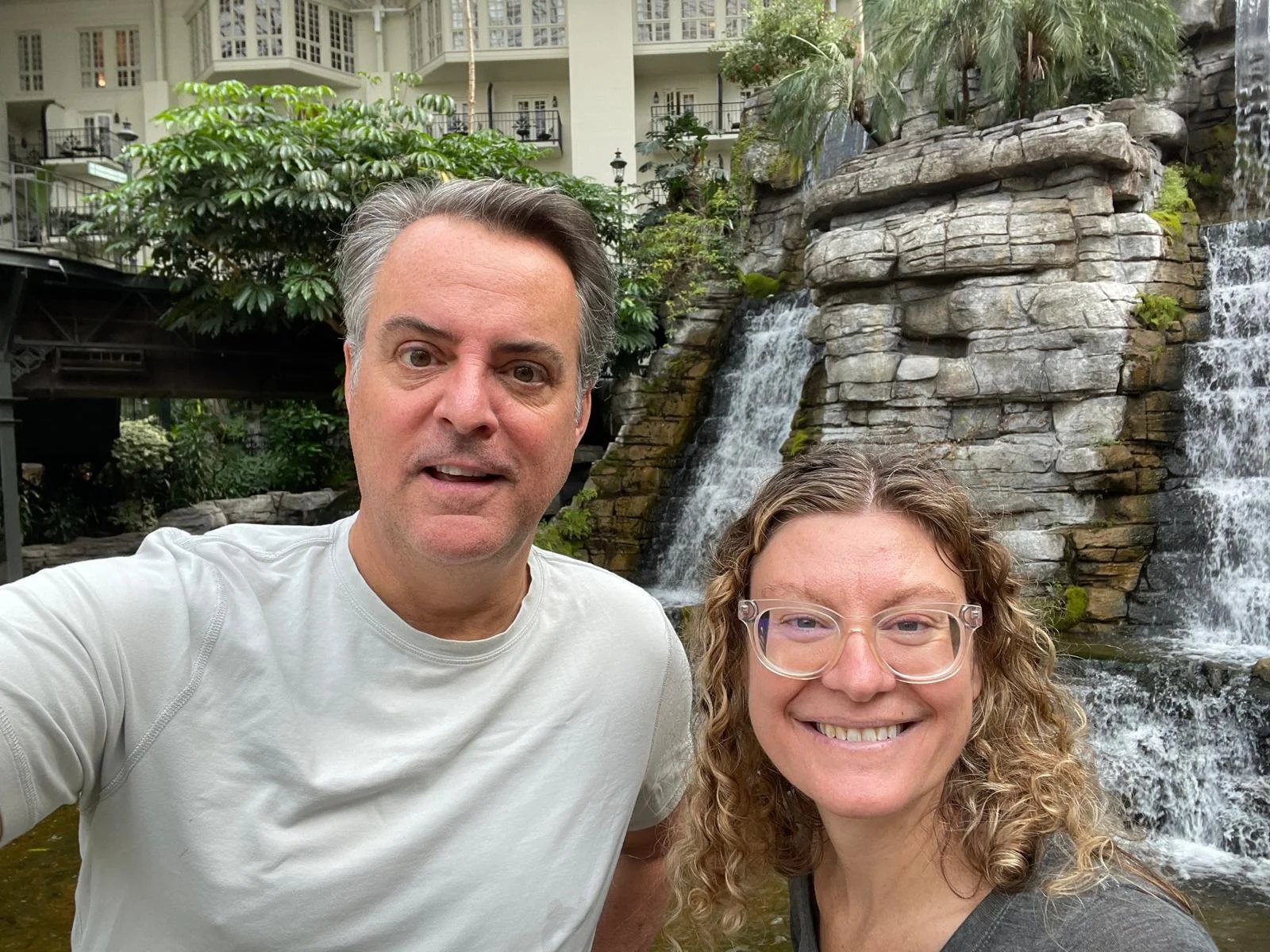
Exploring Gaylord Opyrland Resort with David before class
Throughout the weekend, every person had an opportunity to be fully centered by the group. One person held the talking piece while everyone else listened.
What surprised me most was how uncomfortable I felt as the talking piece made its way toward me.
Long before it reached me, my inner critic would wake up.
Don't mess this up.
Say something smart. But also inspiring.
Don't take up too much space.
I found myself wondering why it felt easier to decenter myself than to fully occupy the center.
Was it because I've spent years putting other people's needs first?
Because it feels safer not to be seen?
Probably both.
But my curiosity didn't stop with me.
I found myself wondering who else in the circle felt comfortable centering themselves and who didn't.
David and I found ourselves wondering how much our comfort with being centered is shaped by the broader systems we live in.
Who's been encouraged to take up space?
Who's been taught to make space for everyone else?
I also noticed something else.
When someone wandered off topic, I felt myself becoming impatient. Then I realized I was holding other people to the same impossible [and quite judgy] standard I sometimes hold myself.
That led me to another question.
What is the facilitator's responsibility, and what is mine as a participant?
It's easy to expect someone else to anticipate what I need. To manage the time. To redirect the conversation. To create the conditions I want.
But leadership asks something different of me.
It asks me to tell the truth about my own experience.
To speak up when I need something.
To help shape the culture I'm participating in instead of quietly wishing someone else would.
I've seen this same shift transform the leaders I coach. When they stop waiting for someone else to read their minds and begin naming what they need, trust tends to grow, not shrink.
I've consciously practiced centering other people for years. I've spent far less time allowing myself to be centered.
That realization has followed me home.
In my coaching work, I often help leaders practice centering and decentering. Leadership asks us to do both. Sometimes we're called to step back and place our full attention on someone else's experience. Other times we're called to step forward, speak honestly, and allow our own voice, needs, and perspective to be seen and heard.
Both matter.
Dr. Gabor Maté writes in his book "When the Body Says No" that when we chronically repress our own needs in order to remain acceptable to other people, we don't eliminate the stress. We carry it. Eventually, our bodies begin expressing what we've spent years trying not to feel.
Many of us have become remarkably skilled at caring for everyone else.
We answer one more email.
We say yes because it's easier than disappointing someone.
We don't speak up when the person holding us conversationally hostage has already taken way too much of our time.
We push through exhaustion because people are counting on us.
We become so practiced at responding to other people's needs that we stop noticing our own.
For many women, caregivers, and people from systemically marginalized communities, this isn't just a personal habit. It's something we've been taught and rewarded for over a lifetime. Choosing ourselves can feel unfamiliar. Vulnerable. Selfish.
But what if it isn't?
What if learning to center ourselves is a key part of becoming the kind of leaders, partners, parents, and friends we want to be?
Over two weekends, I learned the same lesson in two completely different rooms.
One taught me not to rush into danger before making sure I was safe.
The other taught me to notice how uncomfortable it can feel to let myself occupy the center.
Different skills. The same invitation.
Before we can truly show up for other people, we have to learn how to show up for ourselves.
So I'll leave you with a few questions I've been asking myself:
What do you need right now?
What have you been saying yes to that actually deserves a no?
What part of yourself has been quietly waiting its turn?
What would change if you practiced centering yourself first?
Maybe that's what both weekends were trying to teach me.
Before I can fully center someone else, I have to be willing to center myself.
Not because my needs matter more.
Because they matter, too.
If reading this stirred something in you, if you recognize yourself as someone who is quick to care for everyone else but slower to notice what you need, you don't have to figure it out alone.
This is some of the work I love most as a leadership coach.
Together, we can explore what makes it so hard to trust yourself, speak up for what you need, set boundaries without guilt, and lead from a place that feels more grounded and sustainable.
If you, or someone you care about, would like to explore what that could look like, I'd love to meet. Book a complimentary 30-minute conversation, and let's see whether working together feels like a good fit.
P.S. If stepping away from your everyday life to practice this work in community sounds nourishing, there are still two spots left for Courage Quest this October in the red rock desert of Moab. Four days of hiking, reflection, coaching, and meaningful conversation with an incredible group of women. I'd love to have you with us.